Aurélie Cools at VISAPP 2026: Unveiling the "Threshold Paradox" in Marbella 🇪🇸
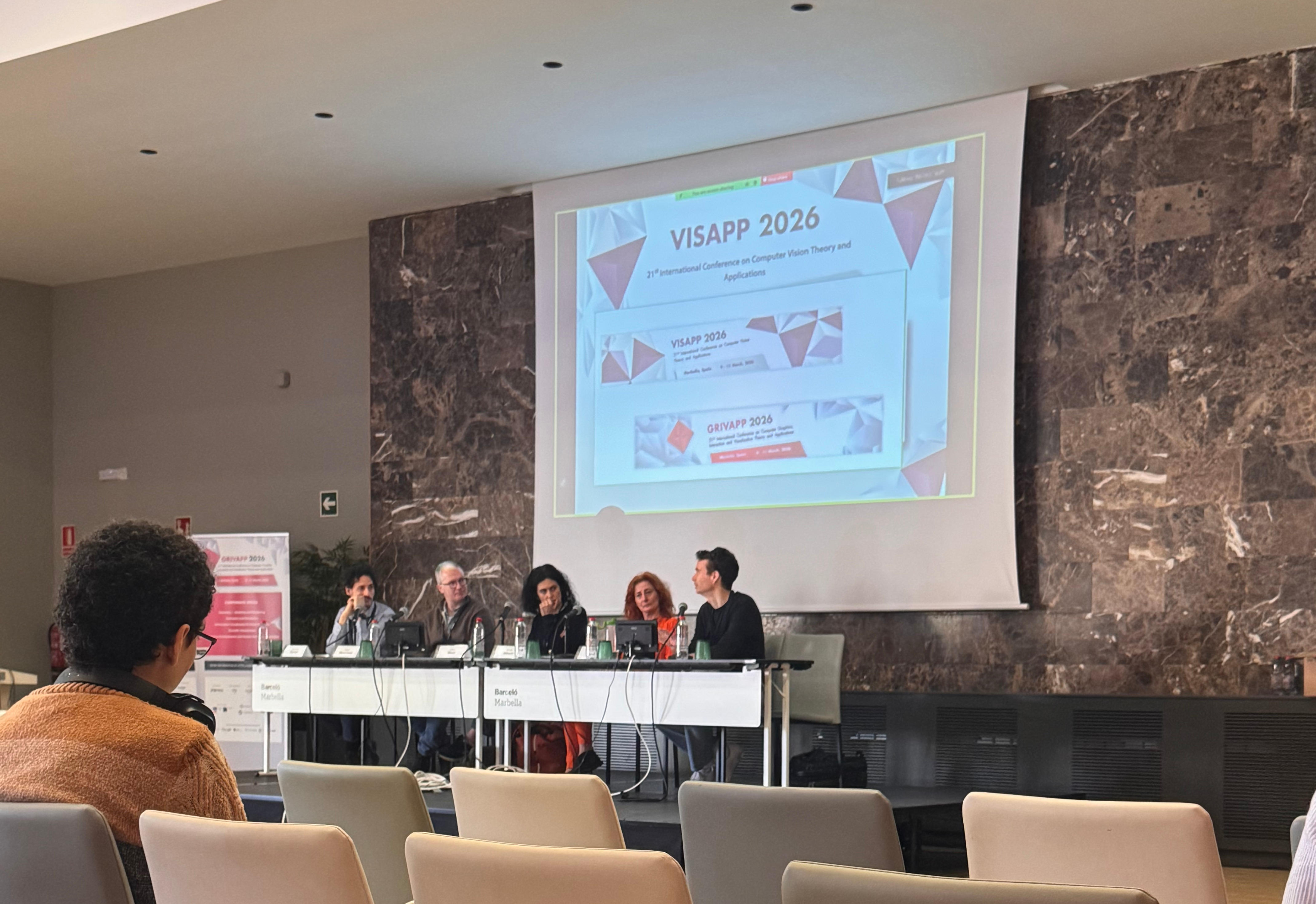
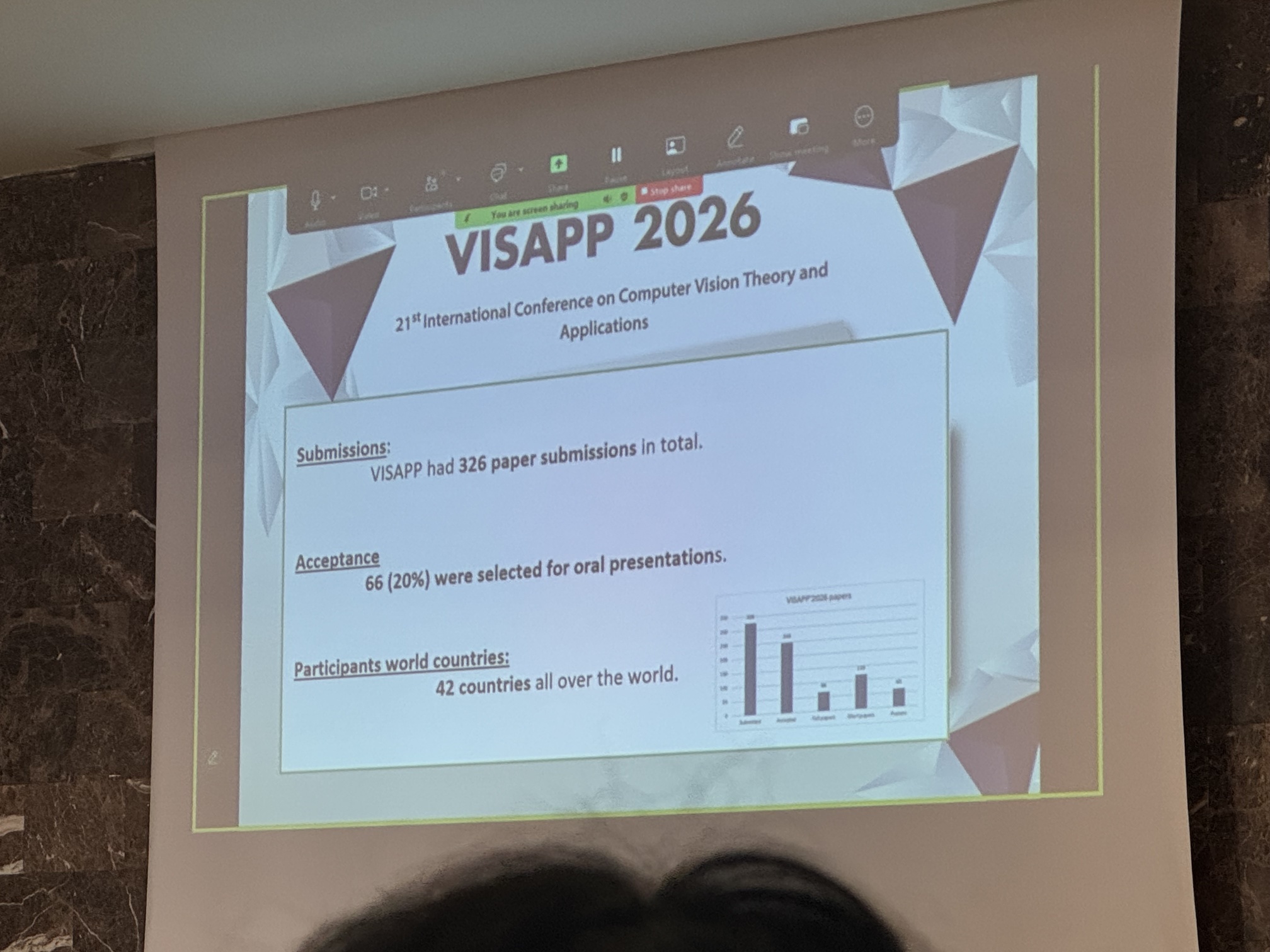
From March 9 to 11, 2026, Aurélie Cools participated in the 21st International Conference on Computer Vision Theory and Applications (VISAPP 2026) held in Marbella, Spain. This prestigious annual event serves as a global hub for researchers, PhD students, and experts to discuss the latest advancements in computer vision and machine learning. With participants representing 42 different countries, the conference provided a vibrant and stimulating environment for high-level scientific exchange.
During the technical sessions, Aurélie had the opportunity to present her research paper titled "The Threshold Paradox: Why Calibrating on the Test Set Introduces Bias in Anomaly Detection" to an international audience. Her work directly addresses a critical methodological flaw: the common but problematic practice of using the test set to calibrate detection thresholds. By highlighting this "paradox," Aurélie questioned current evaluation standards that can lead to artificially inflated or biased results, failing to reflect how these models would perform in real-world scenarios.
The presentation sparked a deep discussion among the experts in attendance. One of the primary questions raised was why such a biased practice remains so prevalent in scientific literature if it does not reflect realistic deployment. This dialogue highlighted a significant gap between theoretical academic research and the practical requirements of industrial applications. Aurélie noted that the lack of synergy between theory and implementation often keeps outdated methodological conventions alive.
Ultimately, the conference was a vital platform for Aurélie to disseminate her findings, receive constructive peer feedback, and expand her international research network. By engaging with researchers from various global institutions, she fostered new perspectives for future collaborations aimed at strengthening the link between theoretical AI research and its practical, reliable application in the real world.
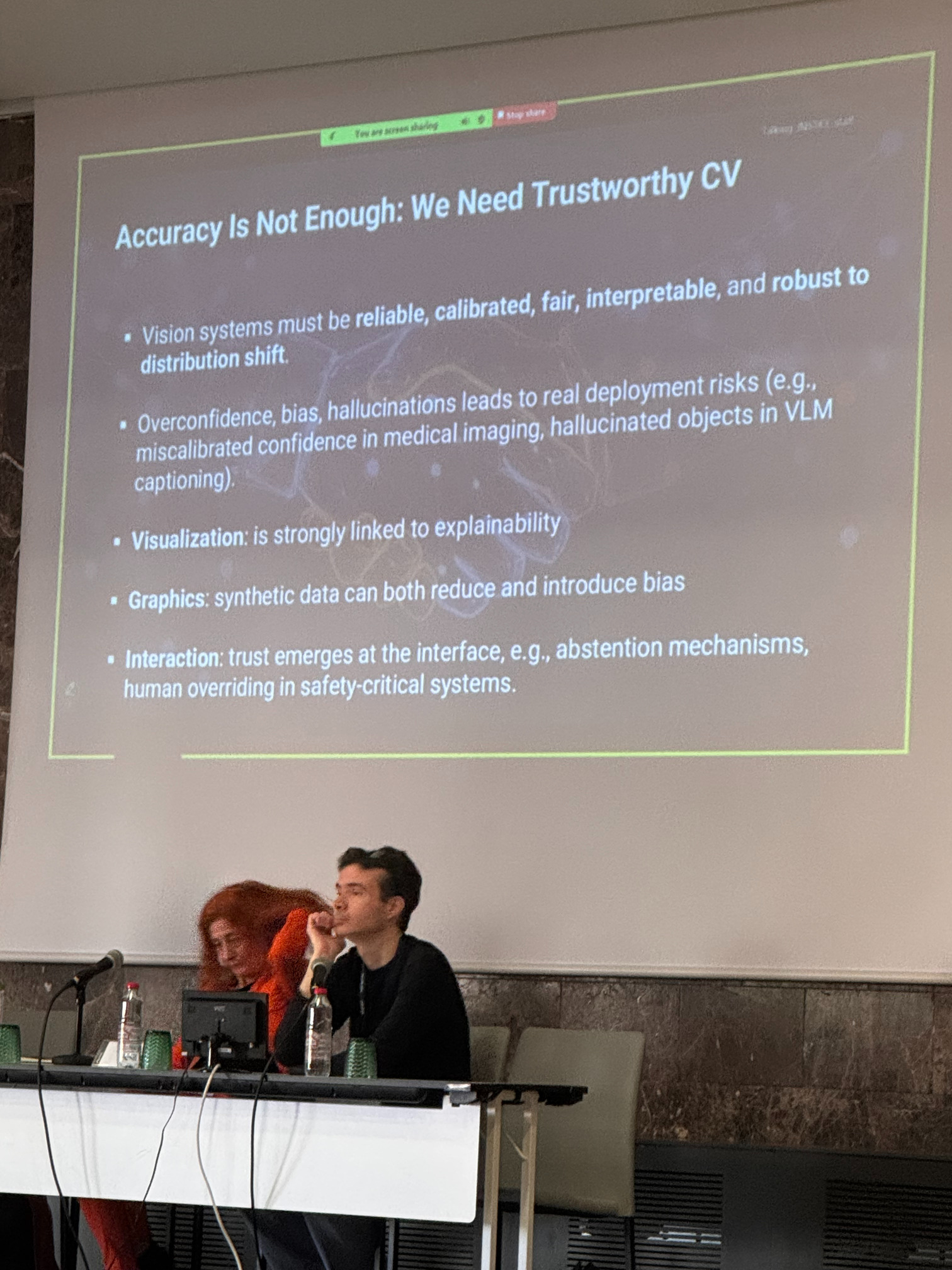
The competitive nature of the conference further underscored the importance of her contribution, as only 66 papers (20%) were selected for oral presentation out of 326 total submissions. Aurélie also drew inspiration from the keynote delivered by Professor Elisa Ricci, whose talk on "Trustworthy CV" and the limitations of current theoretical frameworks strongly resonated with the issues of bias and reliability addressed in Aurélie’s own work.